Night of the Full Moon
- 3.9
- Rating
- 1.00M
- Installs
- Free
- Price

 Analysis by App-foxy
I went into Night of the Full Moon expecting a compact card game with a dark fairy-tale wrapper, but I found something more deliberate: a solo adventure where each choice changes how I approach the next encounter. Its version of Little Red Riding Hood is not a cheerful walk through familiar storybook scenes. The atmosphere is darker, the route feels dangerous, and the cards are the real language of the game. I spend my time choosing encounters, building a workable deck, and deciding when a tempting reward is worth the risk.
That makes it easy to recommend to someone who enjoys thoughtful mobile games rather than constant action. It is free to start, belongs firmly in the card-game category, and comes from Giant Network. The store summary describes a witch’s forest adventure and a dark fairy-tale take on Little Red Riding Hood, which is a fair snapshot of its mood, but it does not explain why the game can hold my attention: the interesting part is learning how to make a run more consistent without turning every decision into a spreadsheet.
How a normal run feels from the first card
The basic rhythm is approachable. I enter a storybook-like journey, face encounters, play cards, and gradually shape a character’s tools for the dangers ahead. The first few decisions are usually easy to understand, but the consequences become clearer after I have committed to a direction. A card that looks useful in isolation may be awkward in the deck I am actually building, while a modest effect can become valuable when it supports a repeatable turn.
You May Also Like

 Blood Strike: 2.5 Anniversary
Blood Strike’s Loadouts Turn Every Drop Into a Tactical Gamble
A close look at Blood Strike’s custom loadouts: how fast access to signature weapons reshapes its battle royale rhythm, rewards preparation, and narrows the gap between fights.

 Pandora - Music & Podcasts
Pandora’s Music Is Easy to Start, but Harder to Recover
Pandora’s strength is its low-effort path from a seed to a station. Its weak spot is how much confidence it asks you to place in connection, setup, and quiet recovery.

 8 Ball Pool
 Is Built on Rivalries, Rematches, and Routine
A close look at the rivalries, rematches, shared routines, and unanswered safety questions that turn a quick pool match into a persistent mobile community.

 Samsung Music
’s Quiet Strength Is Playing What You Already Own
Its reach comes less from spectacle than from dependable access to a personal library. That simplicity is both the app’s strongest retention engine and its ceiling.

 AccuWeather: Weather Radar
AccuWeather Review: A Quick, Clear Forecast for Everyday Decisions
For everyday plans, the best forecast is the one you can understand quickly. AccuWeather makes rain timing, radar, and local conditions easy to act on, with a few trade-offs.

 Hill Climb Racing
Why Hill Climb Racing Still Turns Crashes Into One More Run
A tiny car, a bumpy hill and one more upgrade: Hill Climb Racing keeps resurfacing because its simple chaos makes every near-miss feel personal.
More From Our News Desk



I like that the game gives me a reason to think beyond the current fight. Winning the encounter is only one part of the process. I also need to consider what the reward will do to later draws, whether my deck is becoming too unfocused, and whether I am taking a route that suits my current strengths. That creates a satisfying difference between a lucky run and a controlled one. Luck still matters, but good decisions make bad luck less destructive.
My usual baseline workflow is simple. I begin by identifying the main way I want the character to win, then I treat new cards as support for that plan instead of automatically collecting everything offered. After a difficult encounter, I review what actually helped rather than what looked impressive in the selection screen. This habit prevents the deck from becoming a pile of unrelated effects, which is one of the easiest ways to make later battles feel harder than they should.
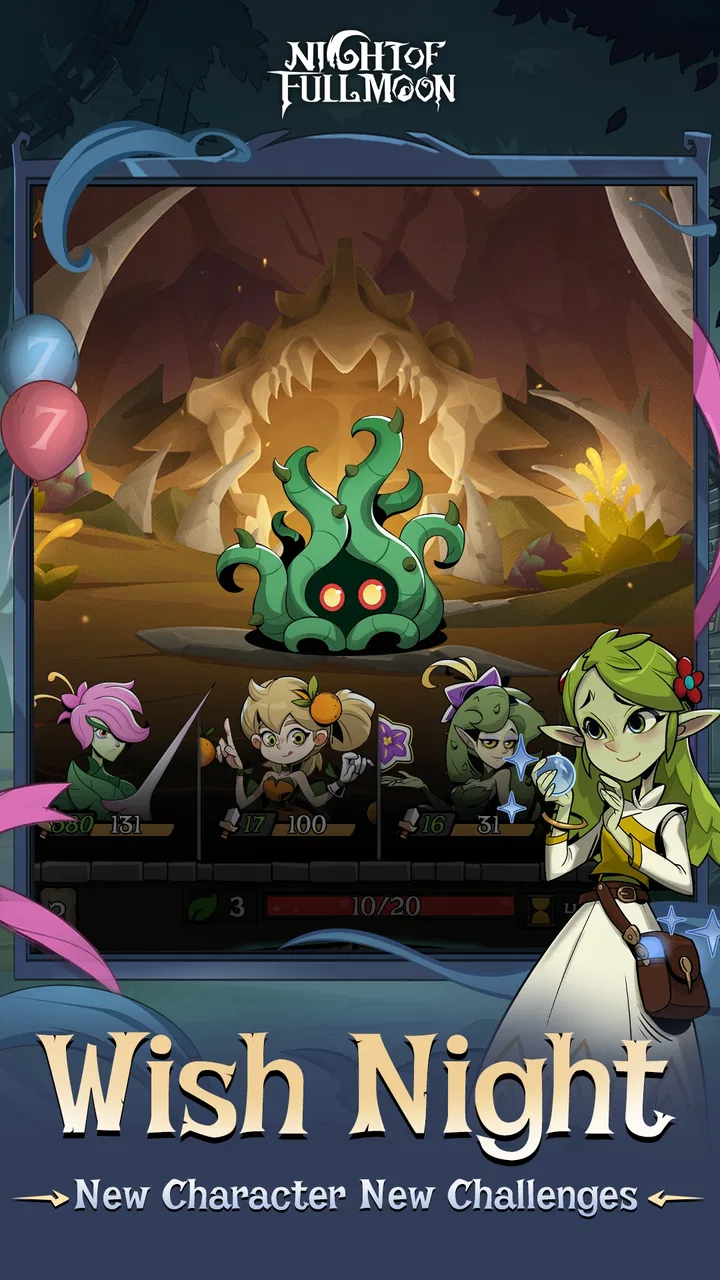
The story setting helps the structure feel coherent. Forest paths, strange characters, and the fairy-tale darkness give the card battles a stronger sense of place than a bare menu of disconnected matches would have. I would not call the narrative the sole reason to play, but it gives the repeated runs a clear identity. Even when I am focused mainly on mechanics, the setting makes the journey feel like a journey.
A realistic everyday use case is a short break where I want something more engaging than an automatic puzzle but do not want to commit to a multiplayer match. I can play a section, stop thinking about it, and return later with a better idea for the next attempt. That said, the game rewards attention. If I am tired and choose cards without reading their role in the deck, I can easily turn a promising run into a messy one.
The first habit that saves time
I recommend resisting the urge to restart every time the opening does not look perfect. Early runs are useful for learning which cards fit together and which rewards are traps for my particular approach. Restarting has a place when I am testing a specific plan, but ordinary play is more productive when I treat an imperfect beginning as information.
Another useful habit is to separate immediate survival from long-term improvement. If a defensive card keeps me alive through a difficult encounter, it may be the right choice even if it is not part of my ideal final deck. Conversely, taking a powerful-looking card can be a mistake when it makes the rest of the deck less reliable. I found that the best decisions often look boring at first because they improve consistency rather than spectacle.
The strongest beginner strategy is not collecting the most exciting cards; it is building a deck that does the same useful thing often enough. That principle helped me understand the game faster than chasing every unusual effect. It also makes losses easier to diagnose, because I can ask whether the plan failed or whether the deck never had a clear plan.
Settings, handling, and a faster repeatable routine
Before settling into longer sessions, I check the available settings and make the presentation comfortable for the device I am using. The game’s dark visual style is appealing, but it can also make a long session feel heavier than a bright, minimalist card game. I pay attention to text readability, sound balance, and whether the current setup makes it easy to notice card details. These are small adjustments, yet they matter when the game asks me to read carefully.
I also treat the interface as part of my strategy. Rather than tapping quickly through every reward, I pause long enough to compare a card with the deck I already have. This is not a hidden trick or an exploit; it is simply a better workflow. The game becomes faster once I stop reconsidering the same basic questions during every encounter. I know what my deck is trying to do, what kind of card it lacks, and which additions would only dilute it.
For repeat sessions, I use a three-step check. First, I identify the deck’s main source of progress. Second, I notice whether my opening hand supports that plan often enough. Third, I watch for the point where adding more cards stops improving the deck. This routine is especially helpful for players who are comfortable with card games but do not want to memorize every interaction immediately.
The free entry point is convenient, but I would still approach the in-app purchase system carefully. Individual purchases range from twenty-nine cents to two hundred nine dollars and ninety-nine cents. That is a very wide span, so I would not tap through offers casually. My advice is to play enough to decide whether the core loop suits you, then set a personal spending limit before buying anything. A free game can be enjoyable without becoming a shopping exercise, but that requires deliberate choices from the player.
The age guidance is Teen, which fits the darker fairy-tale tone better than a children’s bedtime-story label would. Parents should still consider whether the unsettling atmosphere and fantasy danger are appropriate for a particular player. I would also avoid presenting it as a simple children’s card game. The rules are accessible, but the best decisions require patience, planning, and a willingness to learn from failed runs.
Shortcuts that come from preparation, not speed
The fastest players I have seen in this kind of game are not necessarily tapping faster. They reduce hesitation. I do that by keeping a mental note of the deck’s essential cards and by deciding in advance what kind of reward would make me change direction. If a new option does not improve the existing plan, I can reject it quickly. If it solves a clear weakness, I can take it without overthinking the choice.
I also use failed encounters as a review point instead of immediately blaming the draw. Was the deck too broad? Did I choose a reward for its individual power rather than its compatibility? Did I spend useful cards too early? These questions turn a frustrating defeat into a practical adjustment. The game is much more satisfying when I approach it as a series of experiments rather than as a test of whether I can get lucky.
One non-obvious trade-off is that a smaller, more focused deck can feel less exciting while playing, yet it often gives me more control. A large collection of attractive cards creates more possibilities, but it also makes the important cards appear less reliably. I do not apply this as an absolute rule, because a particular route may reward flexibility, but it is a useful default when a run keeps collapsing before the later encounters.
Another is the value of keeping a defensive option even when the deck is built around aggression. A fast plan can look perfect during easy encounters and then fail when an opponent survives the expected sequence. One defensive answer may slow the deck slightly while giving it a way to recover from an awkward opening. I found this especially important when experimenting with unfamiliar card combinations.
The game also rewards recognizing when not to force a favorite strategy. Sometimes the available rewards point toward a different direction, and stubbornly pursuing the original plan leaves the deck incomplete. Experienced play is partly about commitment and partly about knowing when to adapt. I try to preserve the strongest pieces I already have while allowing the weaker parts of the plan to change.
Where the design becomes demanding
The same depth that makes the game interesting can create friction. New players may understand what individual cards do but still struggle to see why a complete deck fails. The game asks me to learn through repetition, and that is rewarding only if I enjoy analyzing mistakes. Anyone looking for a purely relaxing card game may find the decisions more demanding than expected.
There is also a real difference between discovering a card and knowing when to use it. A new effect can appear powerful until I notice its cost in deck space, timing, or opportunity. I had several runs where I chose cards that looked excellent in a single battle but made the overall deck less dependable. The game does not remove that learning curve, and I consider that both a strength and a limitation.
Players who prefer direct competition should know what they are getting into. This is a solo-oriented adventure experience, not the same kind of product as a quick online card battler where the main challenge is reading another human. If I want short competitive matches, visible opponents, and a constantly changing metagame, a multiplayer alternative would suit me better. If I want to refine a build at my own pace, this is the more comfortable choice.
It is also not the best option for someone who wants a traditional collectible-card-game structure built around a large social community. The appeal here is the combination of fairy-tale exploration and run-based deck decisions. Players who mainly want to trade, compete, or compare rankings may find the focus too solitary. I would choose it for atmosphere and experimentation, not for a social card-game routine.
Device compatibility is fairly broad, with the game requiring Android six or later. That makes it accessible on older supported phones, although the experience still depends on how comfortably the screen displays card text and artwork. I prefer a larger screen for longer sessions because it reduces the need to inspect details repeatedly. On a smaller phone, the game remains playable, but careful reading can feel more tiring.
The current version is 1.6.25.14, and the game has been available since October 19, 2017. That history matters to me because it suggests a title with a substantial life beyond a brief launch window. It has more than a million installs, an average rating of 3.9 from roughly seventy-nine thousand ratings, and about five thousand five hundred written reviews. Those figures point to a sizeable audience while also reminding me that the experience is not universally loved.
I can understand the mixed reaction. The game’s presentation is distinctive, and its card decisions have more substance than a simple matching game, but the learning process is not always gentle. A player who expects immediate clarity may interpret the need for repeated attempts as unfair. I think the fairest way to approach it is to give the systems time to reveal themselves, while accepting that some runs will be lost because the plan was weak rather than because the game was impossible.
Practical limits for long-term play
Long sessions can make the repeated structure more noticeable. The pleasure comes from improving decisions and trying different approaches, so the loop may feel less fresh if I am not actively experimenting. I avoid that fatigue by setting a small goal for each session: test a card relationship, learn a route, or improve the deck’s opening. Without a goal, I am more likely to play automatically and mistake repetition for lack of content.
The purchase range is another reason I prefer a measured approach. The game is free, but the presence of optional items means I would not hand a young player unrestricted access to purchases. I also would not buy something simply because a difficult run made me impatient. If progress feels satisfying only after spending, that is a sign for me to step back and decide whether the game still works as a free experience.
Finally, the dark fairy-tale style is not just decoration. It can be a major attraction for players who like eerie stories, but a drawback for anyone wanting a light, cheerful card game. The setting gives the adventure personality, yet it also narrows the audience. I would show the game to a friend who enjoys moody fantasy before recommending it to someone who normally avoids darker themes.
My verdict after learning its rhythm
Night of the Full Moon works best when I play it as a thoughtful solo journey rather than as a disposable time-killer. The card battles are only half the appeal; the other half is learning how to make a deck more dependable, how to recognize a bad reward, and how to adapt when a run does not provide the perfect tools. That combination gives the game a stronger identity than a generic mobile card title.
I would recommend it to players who like dark fairy tales, deck-building decisions, and games that improve as they learn from mistakes. It is particularly good for someone who wants an offline-feeling personal challenge during a commute, a quiet evening, or a short break where pausing is more appealing than competing live. The free starting point makes it easy to test the atmosphere and the basic rhythm before deciding whether it deserves regular attention.
I would tell competitive card-game fans to keep their expectations in check, because this is not a substitute for a player-versus-player ladder. I would also steer away anyone who dislikes repeated attempts, careful reading, or the possibility that a seemingly strong card can damage the whole deck. The game asks for curiosity and restraint, not just quick reactions.
My final advice is to begin slowly, keep the first decks focused, inspect the settings for comfortable reading and sound, and treat purchases as optional decisions rather than solutions to difficult encounters. Once I stopped chasing every attractive card and started building around repeatable patterns, the forest became much more enjoyable to explore. Giant Network’s game is not flawless, but its unusual mix of fairy-tale mood and card-based planning gives it enough character to stand out among mobile card adventures.
For me, the deciding question is simple: do you enjoy improving a plan over several attempts? If the answer is yes, this free card adventure is worth trying. If you want instant action, social competition, or a completely predictable casual game, another option will probably serve you better. I found its best moments in the small decisions that make a later encounter manageable, and that is exactly the kind of quiet mastery that keeps me returning.
FAQs for Night of the Full Moon
01What is Night of the Full Moon about?
Night of the Full Moon is a story-driven deck-building card game set in a dark fairy-tale world. You play as Little Red Riding Hood while searching for your missing grandmother and uncovering the secrets of the forest. Each adventure combines branching encounters, turn-based battles, character classes, collectible cards, and decisions that can change how the journey unfolds.
02Is Night of the Full Moon free to download and play?
The game can be downloaded for free on supported Android and iOS devices, but the available content may include optional purchases. The free version provides a substantial introduction and lets you experience the core card-battle system. Some classes, story chapters, cards, or additional modes may require payment, so check the store listing and in-game purchase details before downloading.
03Does Night of the Full Moon require an internet connection?
Night of the Full Moon is primarily designed as a single-player experience, and much of the main gameplay can generally be enjoyed offline after installation. However, an internet connection may still be needed for downloading the game, receiving updates, restoring purchases, viewing advertisements, or accessing certain online services. Availability can vary by device, version, and region.
04Is Night of the Full Moon suitable for beginners to deck-building games?
Yes, beginners can learn the game without needing previous experience with deck-building titles. The early encounters introduce the basic rules gradually, while battles teach you how cards, abilities, equipment, and resources work together. Nevertheless, later chapters become more demanding, and success depends on building a focused deck rather than collecting cards without considering their overall strategy.
05What makes Night of the Full Moon worth playing?
The game stands out through its combination of atmospheric fairy-tale storytelling and strategic card combat. Each run offers different encounters, choices, enemies, and possible rewards, giving the adventure a replayable structure. Its compact battles are easy to understand but can become surprisingly tactical, while multiple classes and unlockable content provide reasons to return after completing the initial story.
Pros
- Engaging deck-building gameplay with plenty of strategic choices.
- Distinct character classes offer noticeably different playstyles.
- Hand-drawn artwork creates a charming dark-fairy-tale atmosphere.
- Runs are replayable
- with varied encounters and branching paths.
- Works well for short sessions without requiring a constant internet connection.
Cons
- Some advanced content may require purchases or extended progression.
- Random card draws can make certain runs feel unfair or repetitive.
- The large card pool may overwhelm newcomers at first.
- Later encounters can become noticeably more difficult without optimized decks.
- Progression can feel grindy when unlocking new cards and abilities.

Night of the Full Moon
Gallery